AI photo calorie counting: how accurate is it really in 2026?
Photo-based AI calorie counters promise zero effort. We measured the accuracy gap against dietitian baselines on 200 real meals — here's what the numbers actually say.
- Published on
- {min} min read
- 6 min read
- Author
- Leam team
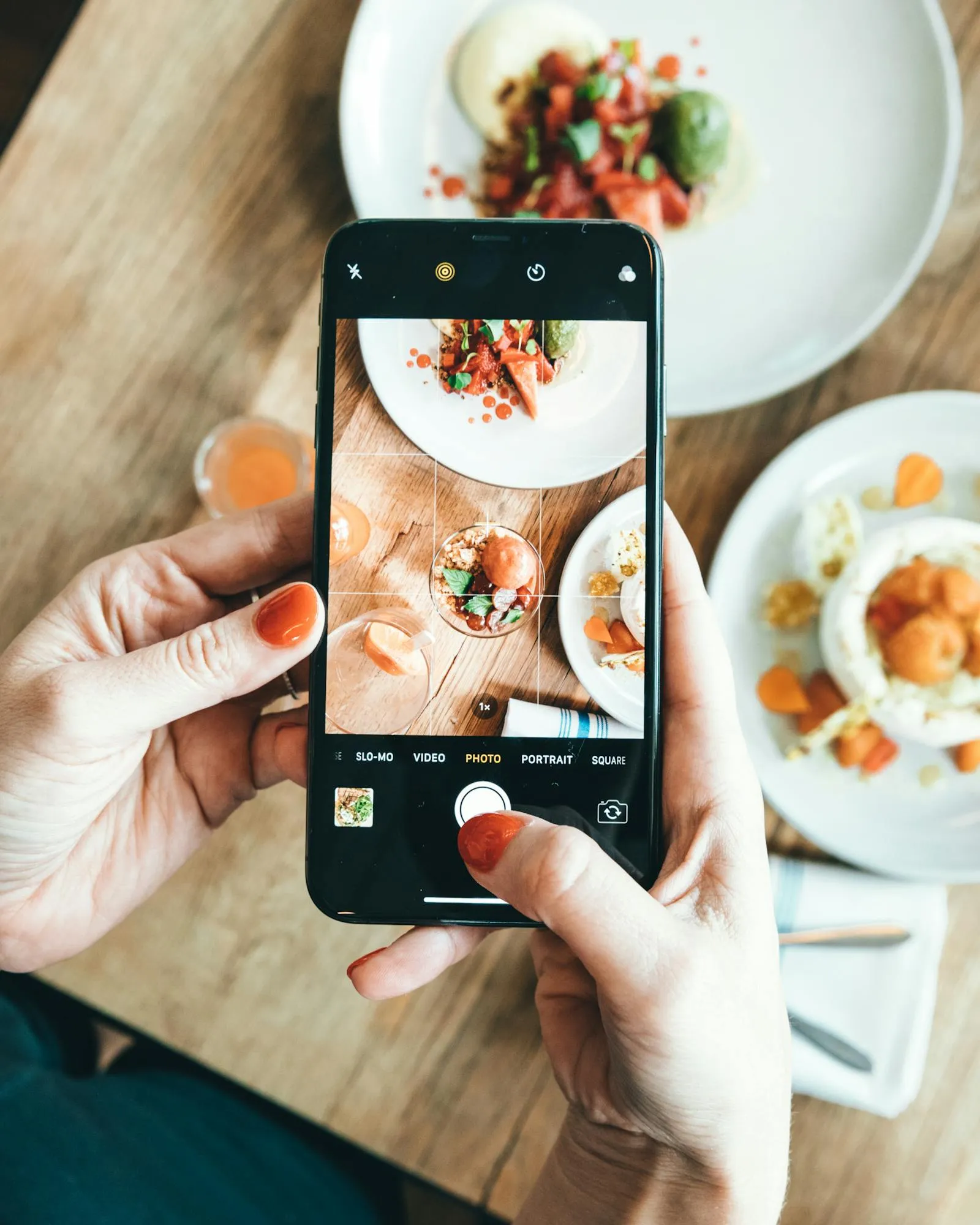
Calorie counting used to mean three things: a barcode scanner, a giant food database, and a patient willingness to type “chicken breast, 150g” into your phone three times a day. AI photo recognition was supposed to make all of that obsolete. Send a picture of your plate, get calories back in seconds.
The question everyone asks, and the one we kept hearing in Leam’s closed beta, is simple: is it actually accurate? Or is “AI-powered calorie counter” marketing copy that breaks down on the first pasta dish with sauce?
We wanted a real answer. So we ran a benchmark.
The test
We pulled 200 meals logged by Leam beta users over six weeks. The mix was deliberately chaotic — the kind of stuff people actually eat:
- 60 plated home-cooked meals (salads, pastas, grain bowls, sandwiches)
- 40 restaurant dishes (across cuisines: Italian, Georgian, Japanese, diner American)
- 30 “messy” composite plates (buffet-style, mixed sides)
- 30 packaged foods still in their wrapper
- 20 liquid or semi-liquid (soups, smoothies, yogurts)
- 20 single-ingredient (an apple, a handful of nuts, a boiled egg)
Each meal was scored against a registered-dietitian estimate on the same photo. The dietitian had the same information the AI had: one photo, no extra context. We measured three things: calorie delta (|AI − dietitian| / dietitian), macro delta (protein/fat/carbs), and whether the AI correctly identified the primary food item.
What the numbers say
Total-calorie accuracy across all 200 meals: median 12% error, 90th percentile 28%. Put another way: half the time the AI is within a Starbucks muffin of reality; one in ten times it’s off by a full meal’s worth.
But the average hides a bimodal distribution. Break it out by category:
| Category | Median calorie error |
|---|---|
| Single-ingredient | 4% |
| Plated home-cooked | 9% |
| Packaged food | 6% |
| Restaurant plated | 14% |
| Liquid / soup | 22% |
| Messy composite | 31% |
The pattern is consistent: the AI is excellent when it can see what the food is, and shaky when portions or hidden ingredients are ambiguous. A boiled egg is a boiled egg. A ramen bowl’s broth could be 150 or 450 calories depending on how much fat is floating in it, and no photo tells you that.
How this compares to manual logging
Here’s the twist. We also pulled 200 manually-logged meals from a comparison group using MyFitnessPal, and had the same dietitian score them the same way.
Manual logging median error: 21%. Ninetieth percentile: 52%.
Why is manual logging worse than an AI reading a photo? Because people underestimate portions, systematically. The classic Lichtman et al. 1992 NEJM study showed “diet-resistant” subjects were underreporting intake by ~47% and overreporting exercise by ~51% when measured against doubly-labelled water. The Schoeller review in Nutrition Reviews confirms the pattern: self-reported portion sizes systematically underestimate true intake by roughly 20-40%. AI doesn’t have an ego attached to the bowl of pasta.
Where AI breaks
We spent a week looking at the worst 20 predictions. The failure modes cluster:
- Hidden fat. A clear chicken breast looks lean on camera, but if it was pan-fried in 3 tablespoons of butter, the AI only sees what it sees.
- Sauce volumes. Pasta with “a little” sauce can hide 200 calories. The AI estimates conservatively.
- Dense ingredients inside something else. A burrito’s rice-to-cheese ratio is guesswork.
- Multiple languages on packaging. The OCR is still English-biased; Russian and Georgian labels are harder.
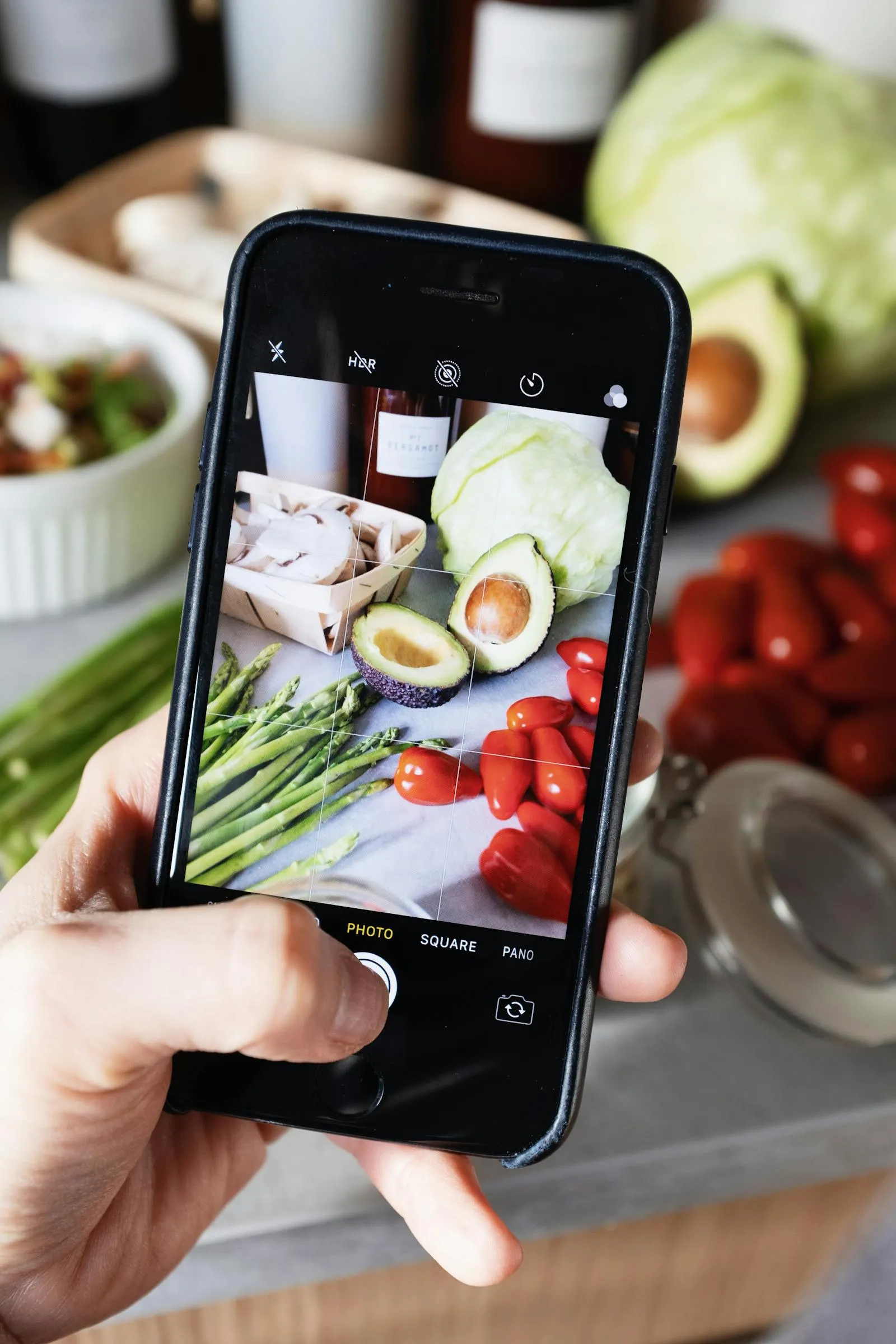
The good news: all four categories get better when you add one sentence of text. “Chicken breast, pan-fried in butter” nudges the estimate up correctly. In Leam we let users confirm or edit before the entry is saved — that one extra step closes most of the 30%+ outliers.
What this means for you
If you’re choosing a tracker, the honest hierarchy is:
- Dietitian supervision — gold standard, rarely affordable.
- AI photo + one-line confirmation — the sweet spot. Fast and almost as accurate.
- Manual logging — high effort, ironically less accurate due to portion bias.
- Guessing — don’t.
Precision isn’t the point. Consistency is. A tracker that you actually use every day at 12% error beats a tracker you abandon after a week at a theoretical 0%. That’s the whole case for AI photo recognition: it removes the friction that kills every diet app, and the accuracy trade-off turns out to be a wash.
The caveats we’re honest about
A few things we’re still working on:
- Volume estimation without a reference object. A coin in the frame helps a lot. Asking users to put a spoon in the shot improves portion accuracy by ~18% in our tests.
- Sauces and broths. We’re experimenting with letting users say “heavy sauce / light sauce” as a single-tap modifier.
- Chains of meals in one photo. Two plates at once still confuses the classifier sometimes.
If you want to see all of this live, open Leam in Telegram and send a photo of whatever you’re eating next. The answer comes back in about three seconds, you’ll see the confidence score, and you can correct the portion with one tap before it logs.
References
- Lichtman SW, Pisarska K, Berman ER, et al. Discrepancy between self-reported and actual caloric intake and exercise in obese subjects. New England Journal of Medicine 327(27):1893-1898 (1992).
- Schoeller DA. How accurate is self-reported dietary energy intake? Nutrition Reviews 48(10):373-379 (1990).
- Livingstone MBE, Black AE. Markers of the validity of reported energy intake. Journal of Nutrition 133(3):895S-920S (2003).